
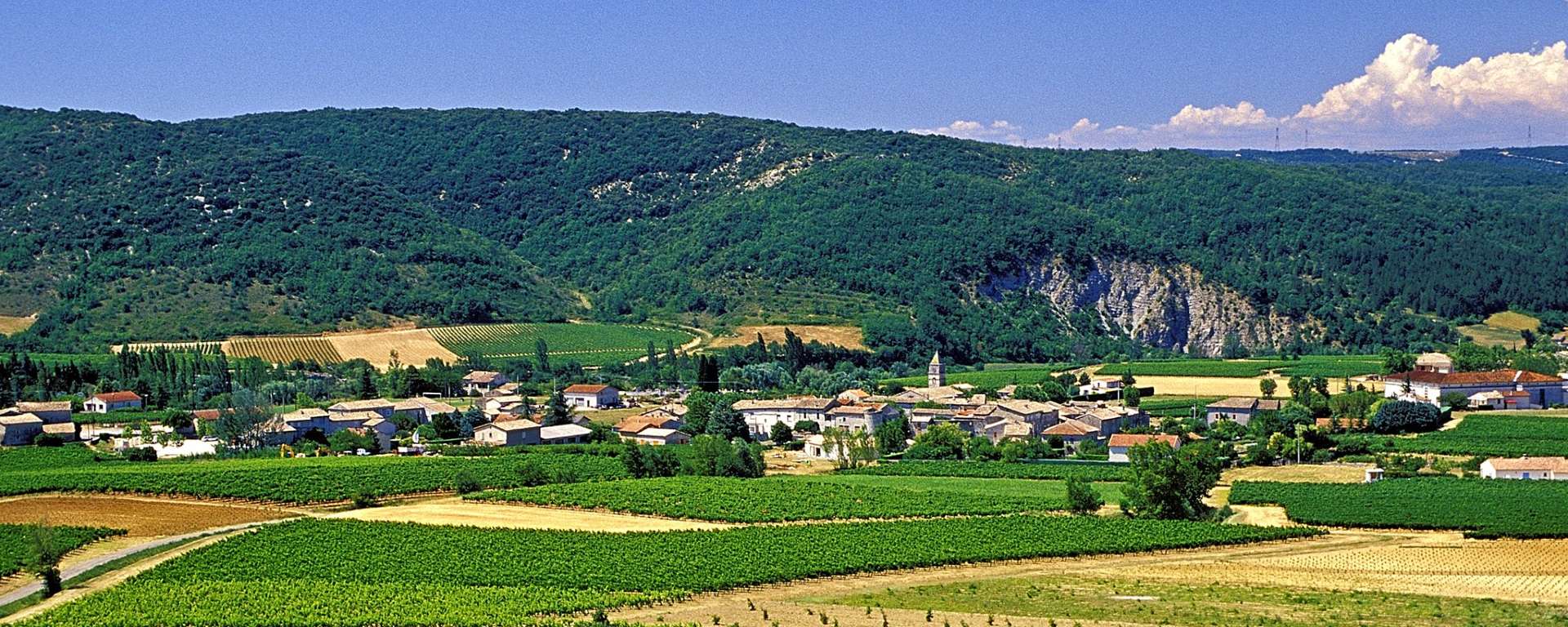
Set amongst unobtrusive ramparts and limestone rocks, Valvignères unfolds like a vineyard-filled valley where two millennia of winegrowing have shaped both the landscape and the village, from the Church of Saint-Symphorien to the Maison de Bonas. Amidst garrigue, hillsides and vineyards, the walk reveals a vibrant terroir, home to Viognier, Chardonnay, Syrah, Grenache and Merlot, stretching out towards the horizons of Alba-la-Romaine and the Coiron massif.

Valvignères, the Vallis Vinaria
The garrigue skirts the hillsides; the village, in the shadow of Saint-Symphorien Church and the Bonas mansion, takes shape in the valley; the village tells a simple story: narrow streets, wine merchants’ arcades, traces of medieval ramparts and horizons of lavender fields that confirm the character of the southern Ardèche and the unique nature of the Dardaillon Valley.
Here, a stroll provides the key to understanding the area, from the north gate to the ramparts, from the dry-stone walls to the burial vaults, near the villages of Alba-la-Romaine and Saint-Thomé and the Coiron hills, all of which complete the picture of the local landscape.
Valvignères unfolds like a limestone amphitheatre where the vine reigns supreme, a landscape of garrigue set upon pale yellow clay and light-coloured marl, a direct descendant of the Gallo-Roman Vallis Vinaria, whose wines were transported far beyond the Rhône, across Gaul and the empire.
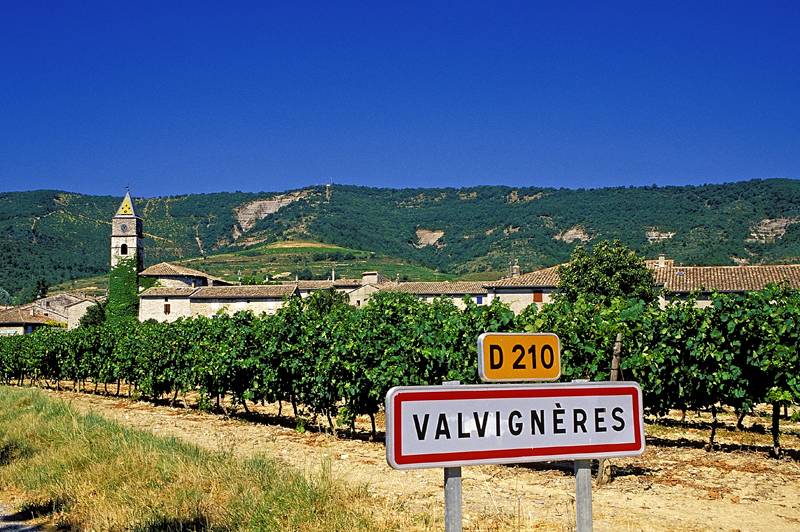
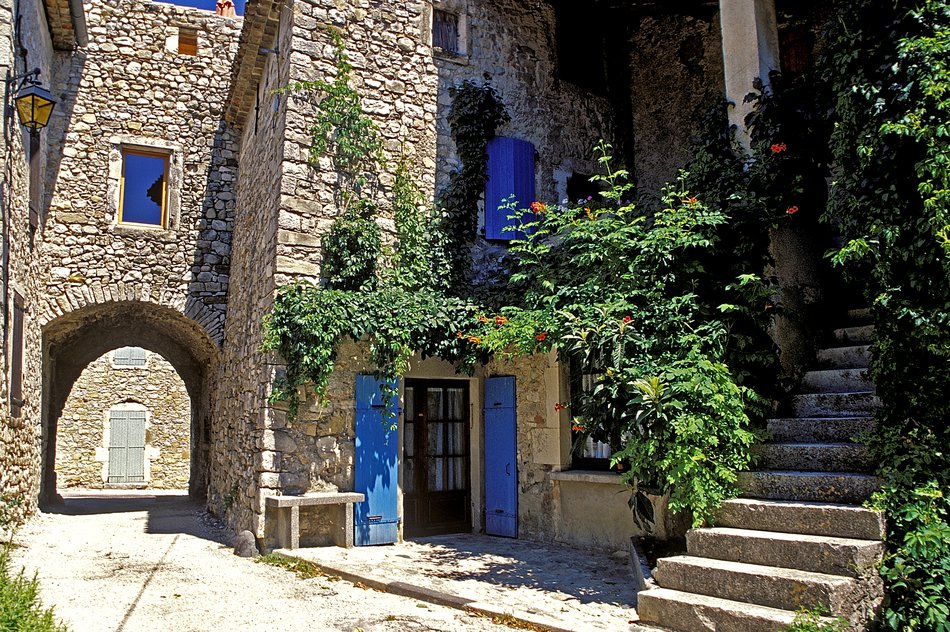
Just a few kilometres from Alba-la-Romaine, the village has a unique character: a village surrounded by ancient ramparts, winegrowers’ houses with covered galleries and a bell tower that draws the eye towards the hillsides – all signs of a region shaped by two millennia of winegrowing.
This village in the Bas-Vivarais, on the edge of the Cévennes, is not defined solely by its vintages; it is best explored on foot, from alleyway to little square, amongst the pale stone buildings, covered balconies and traces of a history where religious peace, the wine economy and rural expertise intertwine.
Valvignères at a glance
Valvignères has a population of 440 (INSEE figures for 2023), spread over 29.78 km², with a population density of 14.8 inhabitants per km².[insee]
The village has a very long history of wine-growing, inherited from the Vallis Vinaria, and still retains key landmarks such as the ramparts, the Church of Saint-Symphorien and the Maison de Bonas.
Key milestones
- Ancient times: the valley was known to the Romans as the “Vallis Vinaria”, the valley of the vineyard.
- The Middle Ages: the market town was fortified with ramparts, gates and towers, which can still be seen in the landscape.
- 15 June 1589: a peace treaty was signed at the Maison de Bonas, in the presence of Olivier de Serres.
- Saint-Symphorien Church: a remodelled Romanesque building, the heart of the village’s heritage.
- Today: Valvignères remains a renowned wine-growing village, holding the “Vignobles et Découvertes” accreditation.
Key figures and data
- Postcode: 07400 / INSEE code: 07005
- Altitude from 135 to 554 metres
- Population: 440 inhabitants; the inhabitants are known as Albaines and Albains (demonym)
- Population density: 14.8 people per km²
- Households: 199
- Median standard of living: 24,100 euros
- Jobs at the workplace: 102
- Labour force participation rate for 15–64-year-olds: 81.2 per cent
- Unemployment rate for 15–64-year-olds: 4.6 per cent
Places to remember
- Bonas House: a reminder of the Treaty of 1589
- Saint-Symphorien Church: a religious and architectural landmark
- Medieval ramparts and gates: traces of the old fortified town
- Vineyard-covered slopes: the scenic and economic heart of the municipality.
The geographical context
In the south of the southern Ardèche, Valvignères lies on the edge of the Berg foothills and the Coiron limestone plateau, offering unobstructed views towards the Rhône valley and the garrigue-covered hills that line the horizon.
The landscape is gently rolling, criss-crossed by valleys and ravines, ideal for circular walks lasting between one and three hours that alternate between the shade of low stone walls and the sunlight filtering through the vineyards; these routes are signposted by the tourist office to make exploring the landscape easy.
The well-drained clay-limestone soils combine water retention with good aeration – qualities sought after for aromatic whites and blended reds, the hallmark wines of the Bas-Vivarais.
A long-running story
The origin of the place name Vallis Vinaria * harks back to ancient times when viticulture was already a cornerstone of the local economy within the sphere of influence of Alba Helviorum *, a neighbouring Gallo-Roman capital whose influence left behind archaeological remains and traditions of the wine trade.
In the Middle Ages, an initial fort surrounded by moats soon proved too cramped, leading to the construction of a second enclosure during the Hundred Years’ War, featuring six crenellated towers, a parapet walk and arrow slits, several elements of which are still visible in the village.
Among the stories of history, one date stands out: 15 June 1589, when a peace treaty between Catholics and Protestants was signed at the Maison de Bonas*, under the auspices of Olivier de Serres – a defining moment for a market town that also served as a place of mediation and respite amidst the turmoil.
Bonas’s mansion and the fortified village
The Maison de Bonas *, a 15th-century Renaissance-style residence, features mullioned windows and a vast state room, reflecting the status of this family, which has been established in Valvignères since the late Middle Ages.
The northern gate of the ramparts remains the only intact entrance, and the holes in the stone bear witness to the mechanism of the drawbridge, which was raised every evening to protect the community.
As you walk around the square and the ‘Tower of David’—recently brought to the fore by excavation work—you can appreciate the defensive logic of a market town clinging to its ramparts, yet open to the surrounding wine-growing plain.
Saint-Symphorien Church
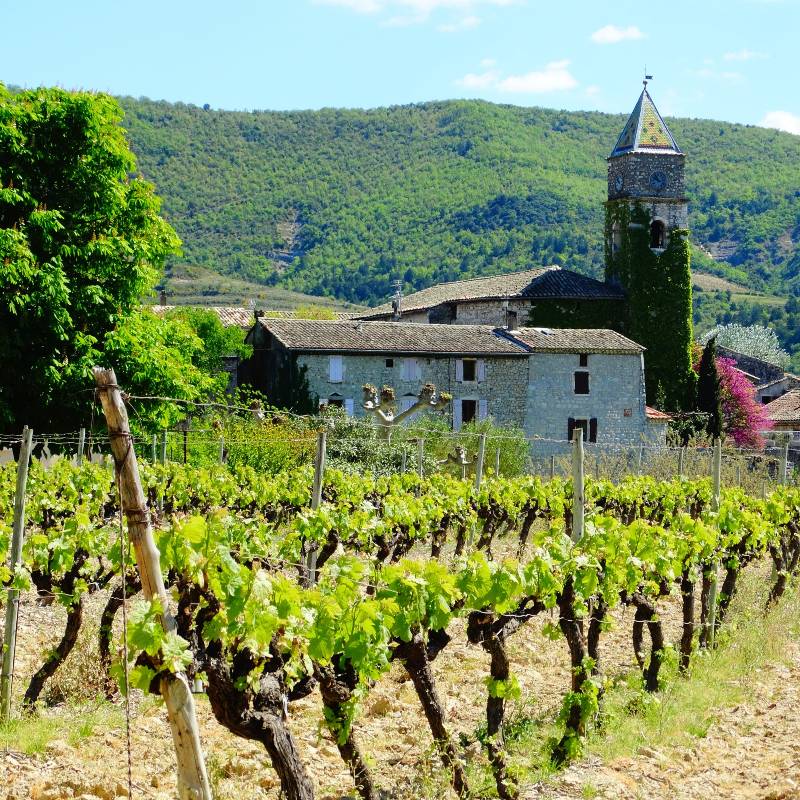
The parish church of Saint-Symphorien is a remodelled Romanesque building, whose elongated plan and barrel and groined vaults bear witness to construction work carried out over a period stretching from the 11th–12th centuries to the 19th century.
The original nave was extended in 1828, followed by the reconstruction of the chancel and bell tower in 1835, resulting in the composite appearance visible today from the Place de l’Église.
A reused altarpiece, comprising elements from the second half of the 17th century, links the church’s interior to the sphere of influence of Viviers, illustrating the circulation of art and sacred furnishings throughout the Bas-Vivarais region.
Wine-growing estates
In the narrow streets, several typical winegrowers’ houses feature a ground floor used for storage and winemaking, and upper galleries supported by stone columns for living quarters and drying.
These light-coloured façades, sometimes featuring mullioned windows, clearly mark the social hierarchy and agricultural practices in the village during the 16th and 17th centuries.
They lend the village an aesthetic uniformity that enhances the appeal of the walk and the surrounding hiking trails, whilst telling the story of the enduring nature of a way of life centred on viticulture.
Two millennia of winegrowing
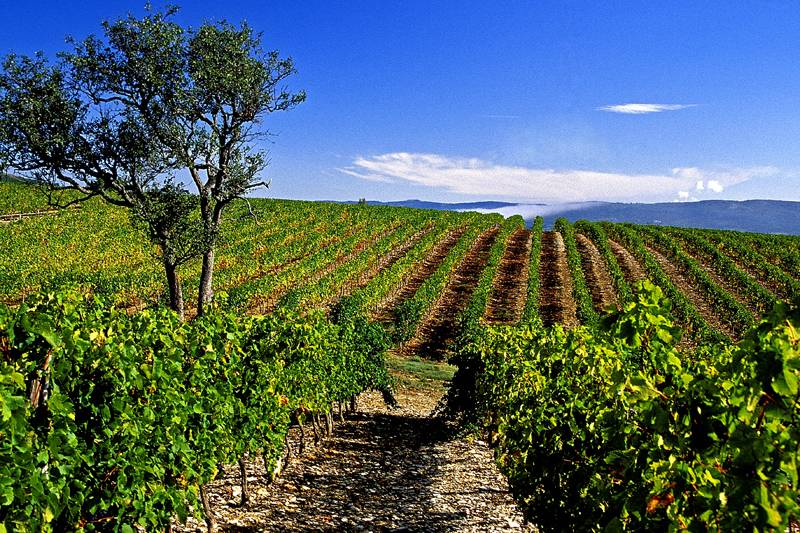
The region’s reputation for wine-making lives on today through a dynamic cooperative winery and family-run estates that produce Ardèche and Coteaux de l’Ardèche PGI wines across a range of grape varieties.
Viognier and Chardonnay produce whites with stone fruit aromas, whilst Syrah, Grenache, Merlot and Cabernet form the backbone of blended reds, complemented by rosés made from Grenache and Cinsault.
From special cuvées right through to late-harvest wines made using the passerillage method, these wines demonstrate the terroir’s capacity to explore more distinctive expressions, guided by precise winemaking practices.
Today, diversification in agricultural production is gradually taking shape, through farm holidays, lavender and CBD flowers from southern Ardèche.
Wine tourism and wine cellar
The winegrowers’ wine cellar and the co-operative winery are natural starting points for exploring the vineyard, its grape varieties and vintages, with tasting programmes regularly featured in specialist
guides. Wines from the region appear in publications such as the Guide Hachette des Vins, reflecting recognition of the in-depth work carried out on aromatic whites and characterful reds.
The presence of organic estates and events combining music, vineyards and sensory discovery illustrates the evolution of wine tourism that prioritises the experience without losing sight of its rural roots.
Rhythms and Seasons
From May to July, a few precious fields of lavender colour the landscape with a mauve blanket, enriching the photographic palette of the vineyards and dry-stone walls – the hallmark of a mild and luminous season.
In the height of summer, it is best to plan visits and walks in the morning or late afternoon, when the air circulates through the valleys and the low-angled light reveals the textures of the façades.
Autumn, with the grape harvest and the amber hues of the leaves, lends extra depth to the views from the edges of the plateau, whilst the wine cellars offer the most faithful reflection of the vintage.
Tour itinerary
A heritage trail lasting around 1 hour 30 minutes to 2 hours links the remains of the ramparts, the Maison de Bonas, Saint-Symphorien Church and the elevated viewing points, offering a comprehensive overview of local history.
Several signposted loops invite you to leave the village, walk alongside the rows of vines and reach viewpoints overlooking the Berg hills and the alternating landscapes of garrigue, with signposting designed to suit all paces.
Guided tours, available depending on the season, complement your exploration with a commentary on the village’s architecture and key historical events.
Two guidebooks for two walking routes are available on the tourist information office’s website:
- PR29, walking route: The Caveaux Loop (5 km) ↗
- PR30, walking route: The Ridge Walk (20km) ↗
The Heritage Thread
An exploration of the ramparts, supported by interpretative displays, highlights the double medieval enclosure and the need for communal living in times of insecurity, from the original moat right through to the crenellated towers.
The Bonas House showcases a discreet yet genuine Vivarais Renaissance style, evident in its mullioned windows and rooms with fireplaces, whilst the north gate preserves the memory of access control.
Religious and community life, evident in the refurbished church and the repositioned statues, continues to shape a public space where votive festivals and cultural events punctuate the year.
- A stroll through Valvignières, taken from *Secrets of the Villages*, Sud Ardèche Rhône Tourist Office
Around Valvignères
In the immediate vicinity, Alba-la-Romaine continues the ancient narrative with its archaeological site and a medieval village built of basalt and limestone, offering an architectural and museum-based counterpoint *.
The Berg & Coiron area reveals a spectacular geological history, from basalt necks and lava flows to troglodytic sites such as the Balmes de Montbrun – all stops that will enrich a themed holiday.
On the right bank of the Rhône, several watchtowers and hilltop villages round off the itinerary, offering strategic views over the river valley and its transport routes.
Identity and Landscape
Valvignères’ visual identity is based on the harmony between the pale stone, the vineyard landscape and the strips of garrigue; a stable composition that the village and its residents strive to preserve through their work on the land and in the fields.
The layout of the rampart-like houses, the hierarchy of the streets and the presence of communal spaces such as the fountain square bear witness to a village organisation long governed by agricultural cycles and the seasons.
This inhabited landscape lends itself to a leisurely exploration, where walking becomes a means of discovery and where a stop at a wine cellar extends the experience through taste, rounding off the geographical exploration with a tasting.
Suggested themed holiday
Historic sites and ramparts: start at the north gate, follow the line of towers as far as the Maison de Bonas, then return via the church to get a sense of the sequence of historical periods.
Vineyards and lavender: set off on a morning walk, take in the slanting sunlight on the low walls and vineyard plots, and round off the day with an educational wine tasting at the wine cellar.
Archaeology and volcanoes: head for Alba-la-Romaine and Le Coiron to discover Roman heritage, basalt formations and cave dwellings, before returning at dusk along the hillsides of Valvignères.
A living heritage
The region’s seasonal programme – including guided tours, night markets and cultural events – reflects the local commitment to combining the promotion of the built heritage, the passing on of knowledge and a sense of community.
The vineyards, through their cooperative members and estates, remain the quiet driving force behind this momentum, with wines that feature in guidebooks and are sought after by a public in search of authenticity.
By combining its fortified history, vineyard landscape and Ardèche hospitality, Valvignères offers a clear and cohesive destination – compact enough for a short break yet rich in variety for those who take the time to explore its surroundings.
- Calendar of events and festivities ↗
Practical information and access
From Montélimar, access is via the N102 national road through Alba-la-Romaine. The small D263 departmental road takes you to the village as you head up the vineyard-lined valley, offering views of the limestone plateaus and the Montagne de Berg.
Practical information, opening hours and tour programmes are available from the town hall and the Porte Sud Ardèche tourist office – essential for organising your stay depending on the season.
For accommodation and dining, the range of options in nearby Alba-la-Romaine and neighbouring towns allows you to combine exploring the local heritage, food and wine tastings, and walks, with a regularly updated list of recommended places.
Routes to Valvignères via:
- Waze ↗
- Google Maps ↗
- OpenStreetMap ↗ (including greenways and cycle routes)
Fancy cycling here?
Since the summer of 2026, the Via Ardèche has made it possible to travel up the Rhône valley from Le Teil and the ViaRhôna towards Aubenas, passing close to Alba-la-Romaine and on to Valvignères!
- Cycling route between Le Teil and Valvignères with Geovelo ↗
Where to stay?
Find accommodation for your stay in Valvignères and the southern Ardèche, either in the town itself or nearby:

Valvignères on a map
Where is Valvignères in France, in the Ardèche? Interactive map showing the location of the commune:
Links to Valvignères
- Village in the Ardèche Rhône Coiron Inter-municipal Community
- Natural Region and the Bas-Vivarais area
- The local council’s website ↗
- INSEE statistics for the municipality ↗
- Introduction to the village, Wikipedia ↗
- Ardèche Tourist Office: Berg-et-Coiron Tourism
- Where to stay in Alba-la-Romaine? Hotels and holiday rentals ↗
- Vallis Vinaria, tourist information centre ↗
- The History of Wine in the Ardèche, Tourist Office ↗
- Alba-la-Romaine archaeological site, Wikipedia ↗
- Bonas Manor ↗, Saint-Symphorien Parish Church ↗, altarpiece ↗, Open Heritage Platform
- Discover Valvingères, Ardèche’s Heritage ↗
- Archaeological Museum in Alba-la-Romaine, MuseAL ↗
- Hiking trails in Ardèche, Rhône and Coiron